If your workweek depends on a manageable drive, Broadview Heights deserves a close look. Many buyers want a suburb that feels connected without signing up for a long, draining commute every day. This guide will help you understand what commuting from Broadview Heights really looks like, who it tends to work best for, and how to think about location within the city. Let’s dive in.
Why Broadview Heights Works for Commuters
Broadview Heights is set up for people who rely on the road. The city highlights two highway interchanges, a population of more than 19,500 residents, and a daily workforce of more than 6,000. It also describes itself as about 15 minutes from downtown Cleveland and about 20 minutes from Cleveland-Hopkins International Airport.
The bigger picture is just as useful. Census QuickFacts shows a 25.7-minute mean travel time to work for 2020 through 2024, while the adopted county planning master plan notes that 91.3% of workers drove to work and 7.9% worked from home in 2017. In plain terms, Broadview Heights supports a short-to-moderate commute pattern rather than a long suburban haul.
Another reason buyers notice Broadview Heights is its location between Cleveland and Akron. County planning identifies the city as midway between those two job centers, which gives you flexibility if your work, family, or travel routine stretches across Northeast Ohio. That can be especially appealing if your household has more than one workplace to consider.
Cleveland Commute Expectations
If you work in or near downtown Cleveland, Broadview Heights can be a practical fit. A safe expectation is a commute in the low 20-minute range under typical conditions, with exact timing shaped by traffic, your route, and your final destination.
The available sources vary a bit, which is normal for commute estimates. Travelmath places the drive at 22 minutes and 16 miles, the city says 15 minutes from downtown Cleveland, and county planning says about 25 minutes by car. The most helpful way to think about it is a rough 15 to 25 minute window rather than one exact number.
For many buyers, that range hits a useful middle ground. You are close enough to make a regular office routine feel realistic, but still outside the core urban setting. If your goal is balancing access and breathing room, Broadview Heights often enters the conversation for that reason.
Akron Commute Expectations
Broadview Heights can also work well if your job pulls you south. Travelmath lists the drive to Akron at 33 minutes and 28 miles, while county planning places the trip at about 32 minutes by car. That makes Akron a realistic daily commute for many professionals.
This north-south flexibility is one of the suburb’s more practical advantages. If you commute to Cleveland some days and Akron on others, or if one person in the household works in each direction, Broadview Heights can offer a useful compromise. You are not locked into one metro pull.
That kind of positioning can matter during relocation. When you are learning a new region, a suburb with reach to multiple employment centers can lower the pressure of getting every detail perfect on day one.
Airport Access and Medical Corridors
If airport access is part of your routine, Broadview Heights checks an important box. The city says it is about 20 minutes from Cleveland-Hopkins International Airport, while Travelmath lists the drive from CLE to Broadview Heights at 26 minutes. A fair takeaway is about 20 to 26 minutes, depending on route and traffic.
That can be helpful if you travel often for work or have regular pickup and drop-off needs. Being within a relatively straightforward drive of the airport adds convenience without requiring you to live right next to it. For many buyers, that is an important quality-of-life factor.
Medical commuters may also want to look at the Broadview Road corridor. RTA’s 53-53A MetroHealth Line runs between Downtown Cleveland and the MetroHealth Brecksville Health and Surgery Center, following Broadview Road and I-71. If your work pattern connects to that corridor, Broadview Heights offers another layer of commuting support beyond the car.
Is Broadview Heights Car-Dependent?
In a word, yes. Broadview Heights is primarily a driving suburb, and the numbers support that. The adopted county planning master plan reports that 91.3% of workers drove to work in 2017.
That does not mean you are cut off from transit. It means transit tends to function more as a backup, a hybrid-work tool, or a targeted option for certain routes rather than a full replacement for a car. If you prefer a suburb where driving is the default, Broadview Heights aligns well with that lifestyle.
For buyers relocating from more transit-heavy areas, this is worth understanding early. Your day-to-day routine will likely feel easiest if you expect to drive most places and treat bus service or park-and-ride access as a supplement.
Transit and Park-and-Ride Options
Even though driving is the norm, Broadview Heights is not transit-isolated. RTA says it serves municipal Park-N-Ride lots in Brecksville and Strongsville, and it offers free parking at Park-N-Ride lots. RTA also states that, as of August 1, 2025, standard fares apply to Park-N-Ride service with no added Park-N-Ride surcharge.
Nearby options include the Strongsville Park-N-Ride, located east of Pearl Road and south of I-80, with service to downtown Cleveland. There is also the Brecksville Park-N-Ride on route 77. For some commuters, these can provide a useful alternative on office days when you would rather avoid driving the full route.
Broadview Heights also has route-based support. The 53-53A MetroHealth Line serves stops including Broadview & Royalton, Broadview & Pleasant Valley, and Broadview & Brookpark, while the 77 Brecksville runs between Downtown Cleveland and Miller Road & Katherine Boulevard via I-77 and Brecksville Road. In practical terms, that gives you a few backup paths if your schedule is not purely car-only.
Broadview Heights for Hybrid Work
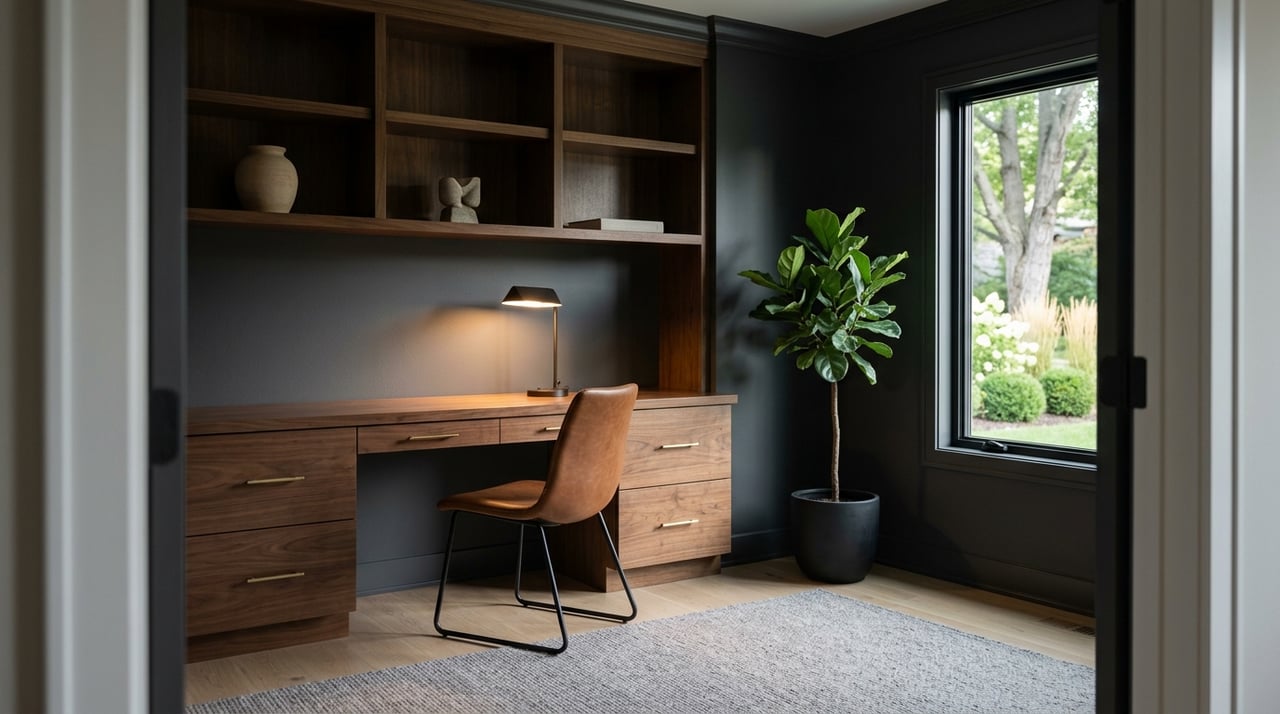
If you split your week between home and the office, Broadview Heights has a lot going for it. Highway access supports in-office days, while home connectivity supports remote work when you stay local. That blend is often what hybrid buyers are looking for.
Census QuickFacts shows that 93.8% of households have broadband and 97.3% have a computer. Those numbers suggest that work-from-home routines are well supported from a technology standpoint. If your ideal setup is a few commute days mixed with home-office days, Broadview Heights fits that pattern well.
This is one reason the city can appeal to relocating professionals. You may not need a full daily commute solution five days a week. Instead, you need a suburb that handles both modes well, and Broadview Heights offers that balance.
Which Areas Fit Your Commute Style
Not every part of Broadview Heights feels the same when you look at commuting. If your top priority is direct access to Cleveland, Akron, or the airport, homes closer to the I-77 and SR 82 side of town are usually the strongest match. That part of the city connects most directly to the highway network.
If you want transit coverage as a backup, or if you work along the MetroHealth and Broadview corridor, homes closer to Broadview Road may make more sense. That location can offer easier access to the bus routes that matter most for this area. For some buyers, that extra layer of flexibility is worth prioritizing.
Deeper residential pockets can still work very well. You may simply be trading a few extra local minutes for a quieter setting and a more purely car-based routine. There is no one right answer, only the version of Broadview Heights that best matches how you actually move through the week.
A Smart Note on Timing
Commute planning is not only about distance. Short-term road projects can affect the feel of your drive, especially when local detours push more traffic onto side streets. That is why it helps to evaluate your likely route, not just the city on a map.
One current example is the Wallings Road Bridge project. The city’s May 2026 update said the closure and detour were expected to remain in effect until August 2026, with completion expected in October 2026. Temporary projects like this do not define the city, but they can shape your day-to-day timing while they are active.
What Commuters Should Take Away
Broadview Heights is best understood as a suburb built for practical movement. It is mainly car-dependent, but it still offers enough transit and park-and-ride support to help hybrid workers and occasional downtown commuters. It also stands out for its useful position between Cleveland and Akron.
If you are choosing a home based on commute rhythm, Broadview Heights gives you options. You can target highway convenience, prioritize transit backup, or choose a quieter residential setting and accept a few more local minutes. The key is matching the part of town to the way you actually live and work.
If you want help narrowing down the right Broadview Heights location for your work routine, relocation timeline, or next move in Northeast Ohio, Anthony Colantuono can help you evaluate the details and move forward with confidence.
FAQs
What is the typical commute from Broadview Heights to downtown Cleveland?
- A practical expectation is about 15 to 25 minutes, depending on traffic, route choice, and your exact destination.
Is Broadview Heights a car-dependent suburb for daily commuting?
- Yes. County planning reported that 91.3% of workers drove to work, so driving is the main commute pattern here.
Can you commute from Broadview Heights to Akron?
- Yes. Akron is generally a workable daily commute, with estimates around 32 to 33 minutes by car.
Does Broadview Heights have transit options for commuters?
- Yes, but they are most useful as backup or hybrid-work options. Key choices include the 53-53A, the 77 Brecksville, and nearby Strongsville and Brecksville Park-N-Ride lots.
Is Broadview Heights a good fit for hybrid workers?
- Yes. The city combines highway access for office days with strong household broadband and computer access for work-from-home days.
Which part of Broadview Heights is best for faster highway access?
- In general, homes closer to the I-77 and SR 82 side of town are usually the best fit for commuters focused on Cleveland, Akron, or airport access.