Most Brecksville sellers walk into a listing appointment ready to talk about paint colors, staging, and comps. The paperwork that actually stalls a closing rarely comes up in that conversation. It shows up two weeks before transfer, when a title company pulls a checklist, a buyer's inspector flags a basement reading, or an attorney notices the disclosure form was signed a day too late.
None of these are hidden. They are just specific to Brecksville, to Cuyahoga County, and to Ohio, and they behave differently here than they do in the neighboring suburbs a seller might have moved from.
The thesis, in one line
In a Brecksville sale, the friction is almost never the house itself. It is three overlapping paper trails: a septic requirement the city outsources to the county, a radon designation that changes what buyers ask for during due diligence, and an Ohio disclosure form with a delivery clock most sellers underestimate. Handle these before the sign goes in the yard and you keep leverage. Handle them after an offer is accepted and you negotiate from behind.
The septic inspection the city itself does not perform
Brecksville has no general point-of-sale inspection. That is accurate, and it is also the reason sellers get blindsided.
If a property is served by a septic system rather than sanitary sewer, a septic inspection is required before the deed transfers. The city's building department confirms this and directs the work to the Cuyahoga County Board of Health. Title company summaries of Cuyahoga County point-of-sale requirements list the fee at $350 for the septic inspection itself, separate from any repairs the report may recommend.
A few things this actually means for a seller:
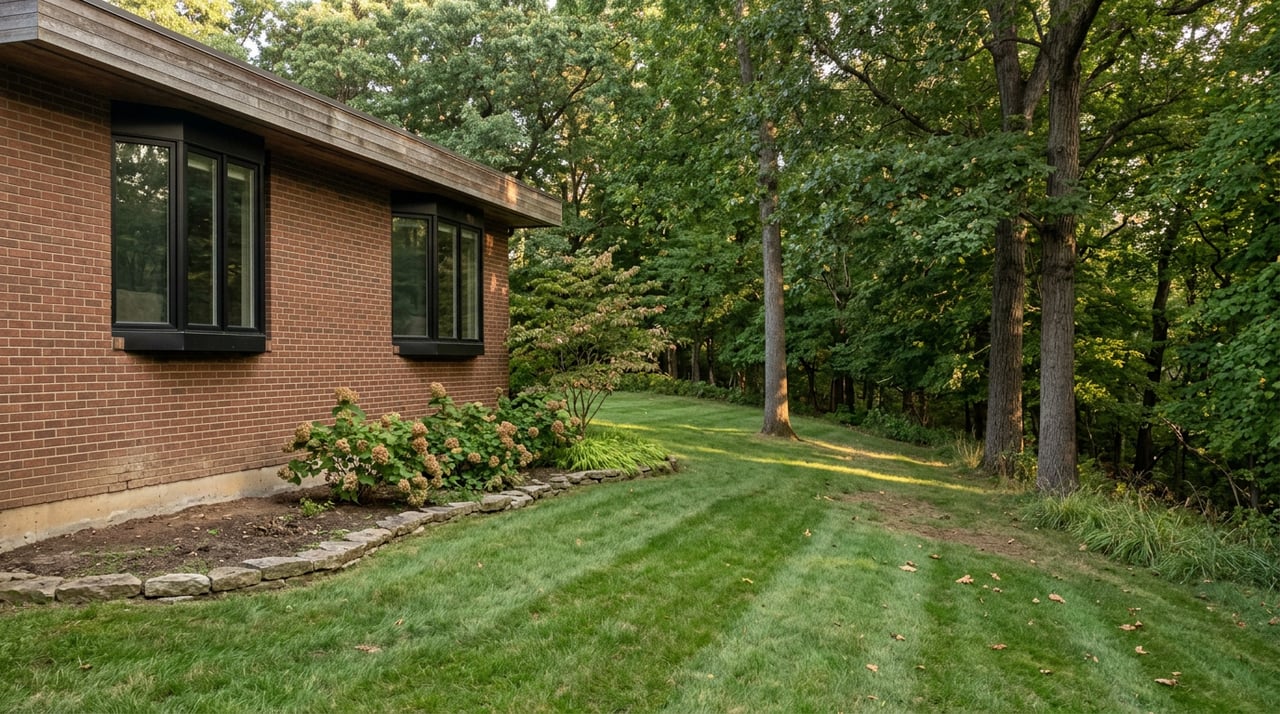
- Homes on the wooded fringes of Brecksville, particularly on larger lots that pre-date municipal sewer extension, are the ones most likely to trigger this step.
- The inspection is a distinct scheduling item with the county, not something the city clears on its own timeline.
- If the report flags a component that needs work, the cost and lead time to correct it belong to the seller by default, and both are commonly higher than a comparable septic repair in a rural Ohio market because of contractor demand across Greater Cleveland.
The move here is simple. Confirm sewer versus septic status before pricing the home, and if it is septic, initiate the county inspection early enough that any repair scope is known before the first showing. A buyer who learns about a failed septic component during the inspection contingency asks for a price concession. A buyer who sees a clean county report attached to the listing does not.
Radon in a Zone 1 county
The EPA's Map of Radon Zones places Cuyahoga County in Zone 1, the highest predicted-average category, alongside a large share of northern Ohio counties. The county-level average from aggregated indoor tests sits around 2.2 pCi/L, which is below the EPA's action level of 4 pCi/L but above the 2 pCi/L threshold where the EPA suggests owners consider mitigation.
Two features of Brecksville housing stock interact with that designation:
- A large portion of the inventory has full basements, which are the rooms radon tests are conducted in and the rooms buyers care about finishing.
- Homes on wooded lots often have long-established foundation drainage patterns that make radon entry pathways more variable from one property to the next.
Buyers and their agents in this market know the zone map. Radon tests are close to standard on Brecksville inspections, and a reading above 4 pCi/L will almost always produce a request that the seller either install a mitigation system before closing or credit the buyer for one. A passive-to-active mitigation retrofit in Northeast Ohio typically runs in the low four figures, which is small in the context of a Brecksville sale price but large in the context of a negotiation where the buyer now has a specific, EPA-anchored reason to renegotiate.
Two options exist for sellers who want to control this variable:
- Test the home before listing. If the result is well below 4 pCi/L, the number becomes a selling point. If it is above, mitigation installed in advance removes an entire category of inspection-response demands.
- If a mitigation system is already in place, keep the installer's paperwork and the most recent post-mitigation test result with the disclosure packet. Buyers ask.
The Ohio disclosure form has a clock
Ohio Revised Code § 5302.30 requires the seller of most one-to-four-unit residential properties to complete the state-prescribed Residential Property Disclosure Form, published by the Ohio Department of Commerce, and deliver a signed and dated copy to each prospective buyer "as soon as is practicable."
Three details on this form are worth pinning down, because they are the ones that create rescission risk:
| Detail | What the statute does |
|---|---|
| Which form | Only the current state-prescribed version satisfies the statute. Out-of-state or generic forms do not. |
| When it is delivered | Before the buyer signs the purchase contract. |
| What happens if it is late | Under ORC § 5302.30(K), the buyer may rescind the contract, with the window running the earlier of three business days after the form is finally provided or 30 days after the contract is signed. |
A seller only has to disclose what they actually know. Ohio does not require an independent inspection to complete the form. What the statute does require is good faith, which means a seller cannot mask an odor, lock a buyer out of a garage, or route around a known issue by leaving a category blank.
Two categories inside the form get glossed over by Brecksville sellers more often than any others: water supply and sewer questions (the same septic status that triggers the county inspection above) and hazardous conditions, which includes any known information about radon testing and mitigation. Answers to both should match the paperwork the seller already has in a drawer. Inconsistencies between the disclosure form and the inspection report are one of the fastest ways to lose a deal in the contingency period.
Why this matters more in 2026 than it did in 2023
The market has changed shape. Sally Crist of RE/MAX Above & Beyond in Brecksville, quoted in a February 2026 local outlet, noted that multiple-offer situations have resurfaced in recent months and that accurately priced, properly marketed homes are again moving in one to two weeks. Realtor.com data cited in the same piece placed the 30-year fixed mortgage average near 6.18% in late January 2026, a roughly one-percentage-point drop from a year earlier. Zillow's Home Value Index for ZIP 44141 sat at $441,861 as of the April 30, 2026 update, up 5.8% year over year.
The read on that combination is straightforward. When a seller has multiple offers, the strongest offer usually wins on terms as much as on price. Clean pre-listing paperwork, a resolved septic file, a radon result already in hand, and a disclosure form delivered on time all remove reasons for a buyer to ask for concessions or to slow the timeline. In a slower market they saved a deal. In this market they protect the number on the top offer.
A short pre-listing checklist
- Confirm sewer or septic status in writing before setting a price.
- If septic, schedule the Cuyahoga County Board of Health inspection early. Budget $350 for the inspection itself and reserve time for any recommended repairs.
- Conduct a private radon test in the lowest livable level of the home. Keep the result with the listing file.
- If a mitigation system exists, gather installer records and a recent post-mitigation reading.
- Complete the current state-prescribed Residential Property Disclosure Form and coordinate delivery so it reaches every prospective buyer before signature.
- Cross-check the disclosure form against any inspection reports, repair invoices, and mitigation records already in the home's history.
FAQ
Does Brecksville require a general point-of-sale inspection? No. The city does not perform a general POS inspection on residential transfers. It does require a safety inspection tied to certain rental and commercial situations, and it enforces the county-level septic inspection for properties on septic systems.
If my home has been on public sewer for decades, does any of the septic guidance apply? No. The septic point-of-sale inspection applies only where a private septic system is in use. Homes connected to sanitary sewer skip that step entirely.
Can I sell "as is" and avoid the Ohio disclosure form? An "as is" sale in Ohio does not waive the Residential Property Disclosure Form for most one-to-four-unit residential transfers. Specific exemptions exist for court-ordered transfers, certain fiduciary transfers, and a handful of other narrow categories under ORC § 5302.30, but "as is" language in the purchase contract is not itself an exemption.
Preparing to list
Brecksville rewards sellers who show up with their paperwork already organized. The septic file, the radon record, and the disclosure form are not marketing. They are the conditions under which a strong offer stays strong through closing.
If a Brecksville sale is on the horizon this fall or into next spring, Anthony Colantuono and the Real Estate Legacy Group can walk through the specific pre-listing sequence for the property, coordinate the county and vendor work, and price the home against the current 44141 comp set. Schedule a free consultation to begin.